

Why is there an Armenia in Colombia?
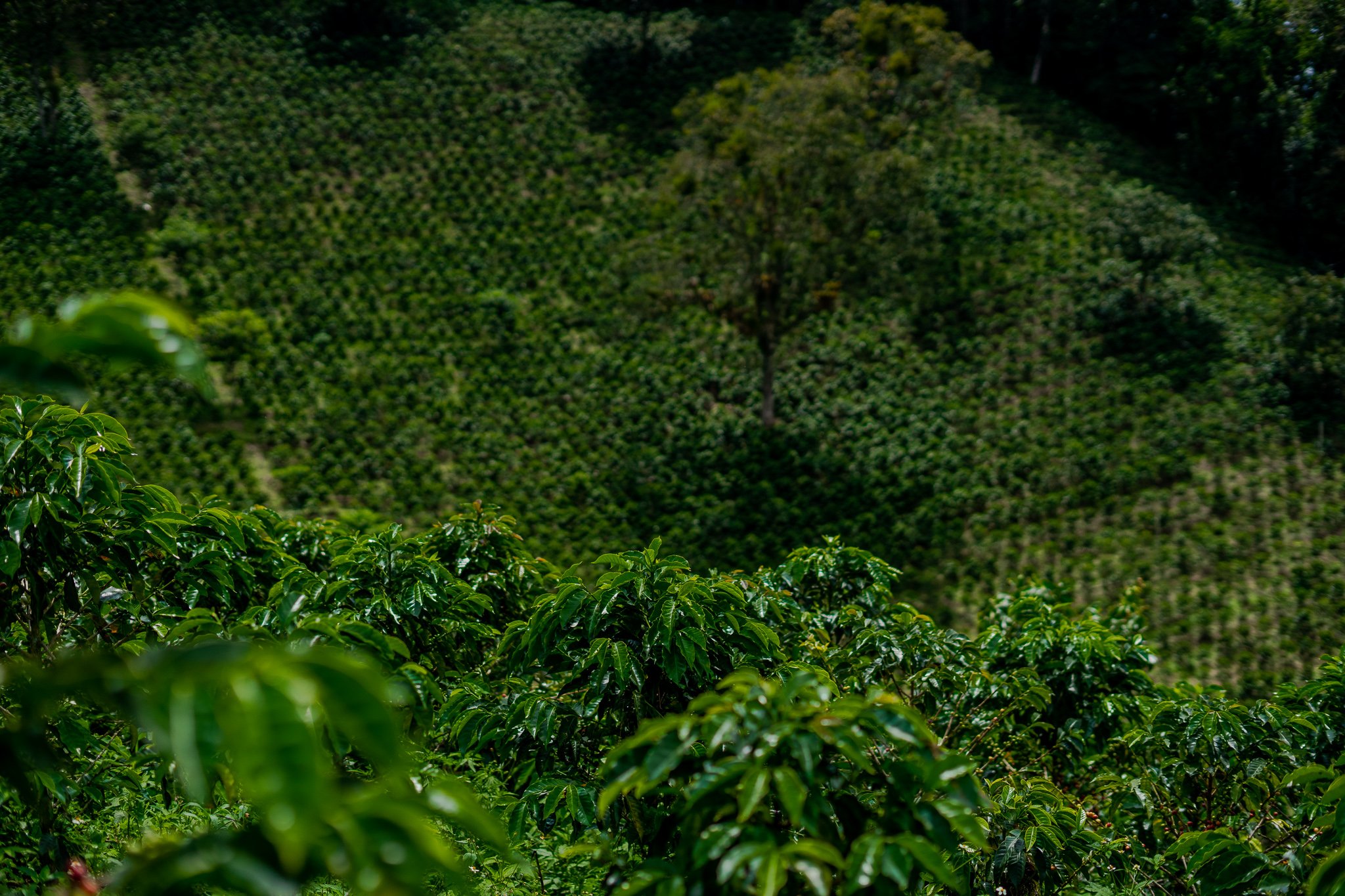
Most people are surprised to hear there's a city called Armenia in Colombia. It sits high in the Andes in Quindío, part of Colombia's coffee-growing region, at about 1,500 meters (nearly 5,000 feet). About 300,000 people live there today.
It's also where our coffee comes from.
For us, the name is where everything started. Shahen is Armenian. Catherin is Colombian, and grew up visiting coffee farms in this region with her family. When we learned that some of Colombia's best coffee grows around a city named Armenia, it felt like more than a coincidence. Here's the story of the place, and why its founders chose that name.
Why the founders chose the name Armenia
Armenia was founded on October 14, 1889, by settlers led by Jesús María Ocampo, a jaguar hunter everyone called "El Tigrero." He bought the land, set up a trading post, and sold plots to the families who came to farm. Many of them had come to these mountains fleeing Colombia's civil wars.
The settlers came from different political backgrounds, and the first names proposed, like Villa Holguín after Colombia's president at the time, Carlos Holguín, were politically charged, so they were set aside. Instead, they chose the name of a local farm: Armenia. Its owner had named it in honor of Armenia's history and biblical legacy. Luis Fernando Ramírez, a historian and former city councilor of Armenia, explained the choice in an interview with our friends at Little Armenias, which you can watch on Instagram. The settlers had two reasons:
It belonged to no faction. Colombia was divided between Liberals and Conservatives, federalists and centralists. Armenia was a name no side could claim.
It honored a nation that meant something to all of them. Whatever their politics, the settlers were Catholic Christians, and Armenia was the first country to officially adopt Christianity. It was also where, after the Great Flood, Noah's Ark came to rest on Mount Ararat, giving humanity a second chance at life. Having fled war, the settlers had found their own second chance here. The name was put to a vote and chosen by a large majority.
A name that came to mean even more
You may have heard that the city was named to honor the Armenians killed in the Ottoman Empire. The name came first: it was chosen in 1889, before the Hamidian massacres of 1894–1896 and the Armenian Genocide that began in 1915. But the city has made that connection its own. In 2014, Armenia's city council formally recognized the Armenian Genocide and set April 24 as a day of remembrance. A town named for the first Christian nation and its story of a second chance now honors the Armenian people too, and that's the connection we care about most.
The heart of Colombia's coffee country
Armenia sits in the Eje Cafetero, the Coffee Axis, along with the cities of Pereira and Manizales. In 2011, UNESCO named the region's Coffee Cultural Landscape a World Heritage Site. It recognized more than a century of coffee grown on small family farms, often on slopes steeper than 25 percent.
The mountains give the coffee what it needs: altitude, steady temperatures of about 16 to 25°C (61 to 77°F), and plenty of rain. Most farms are small and family-run, and the slopes are too steep for machines, so the coffee is picked by hand.
The city has been through a lot. In 1999, an earthquake destroyed much of Armenia and took about 1,900 lives across the region. The city rebuilt, and today it's one of the most visited places in Colombia, the gateway to the Cocora Valley and its towering wax palms.
From Armenia, Colombia, to an Armenian cup
Our coffee comes from small farms in Quindío, in towns near Armenia like Buenavista, Pijao and Córdoba. We buy specialty-grade Caturra and Castillo and roast it to bring out what the farm put into the bean.
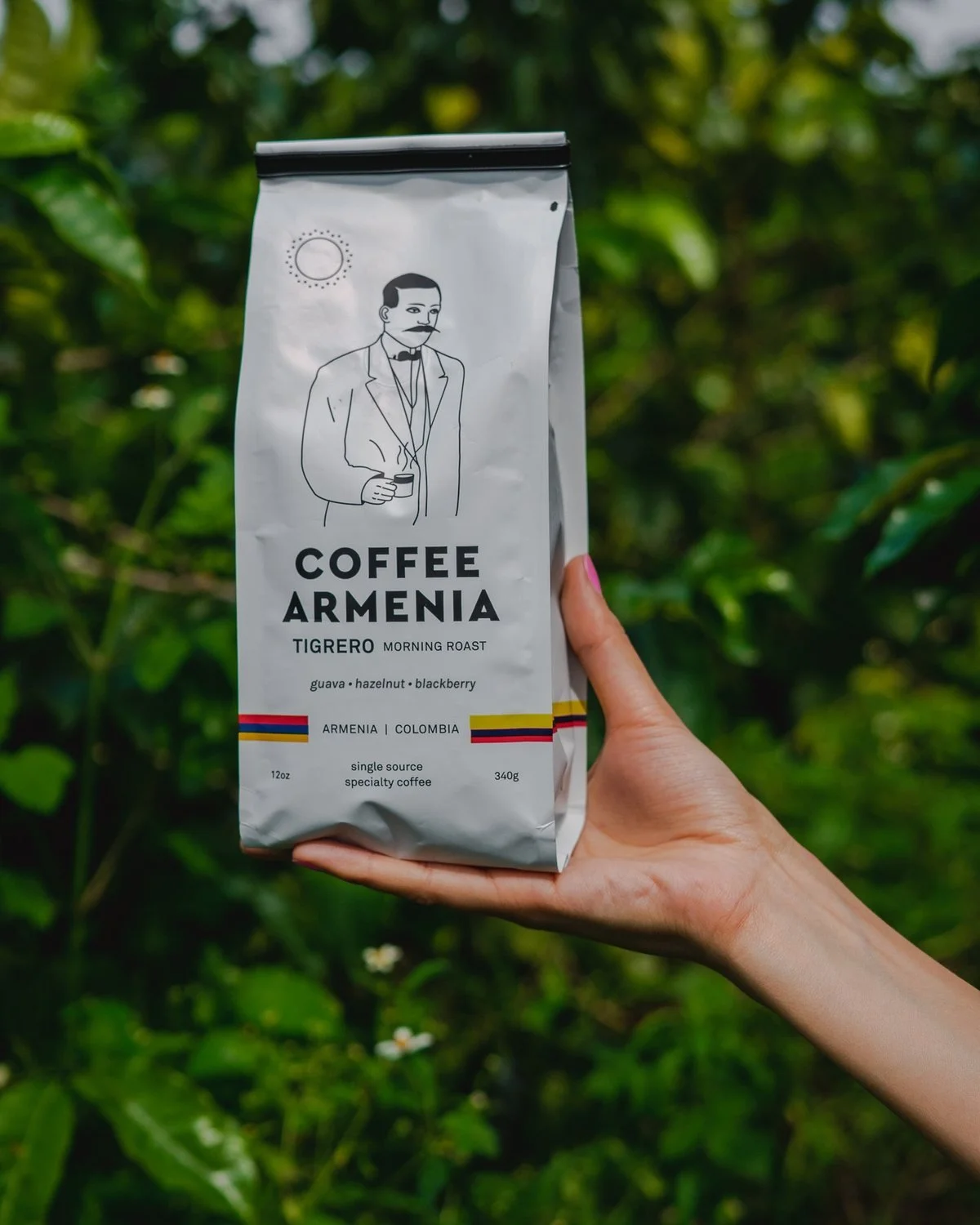
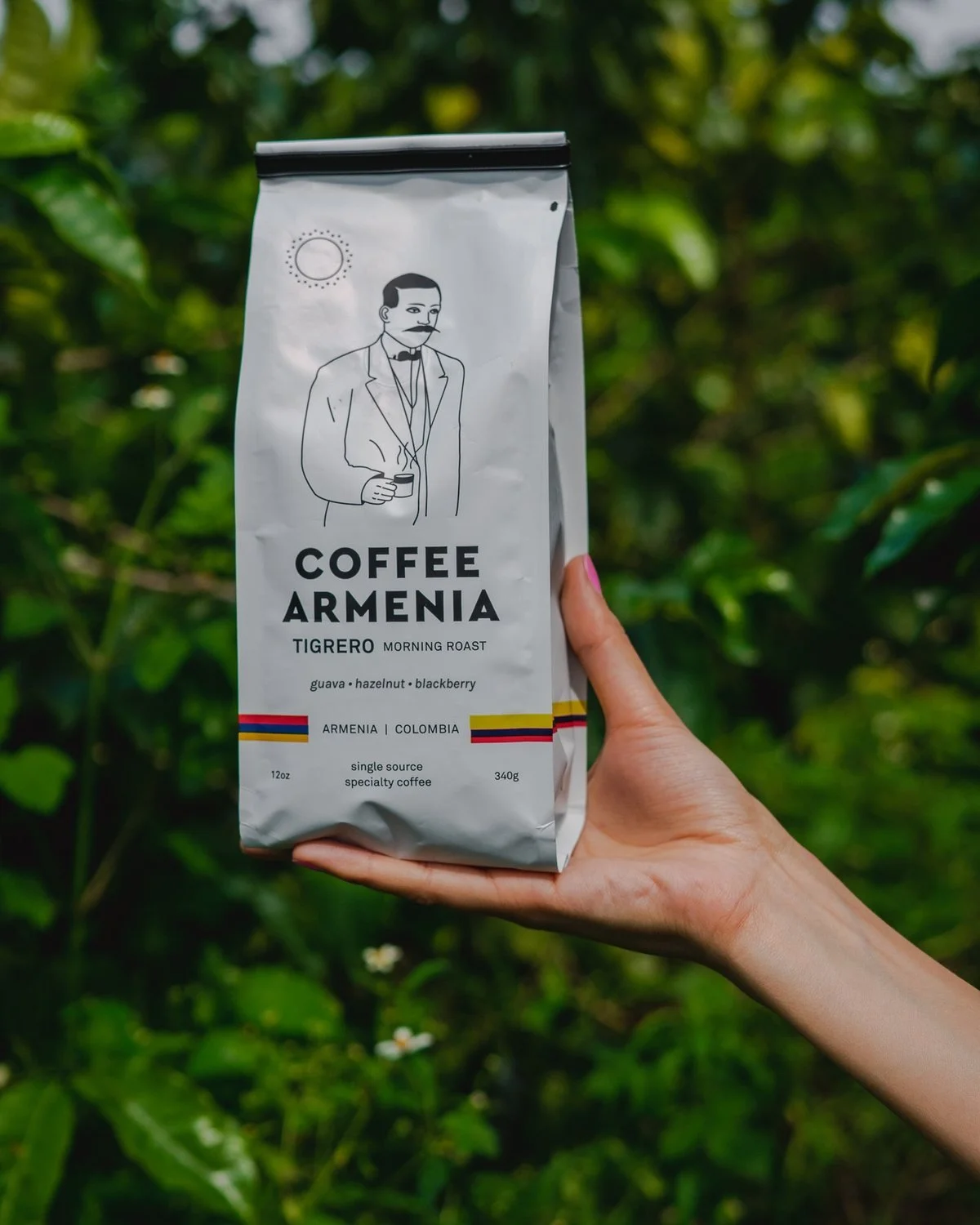
Minias, our coffee for Armenian-style brewing, scored 84.5. We roast it medium so it builds a thick foam in the jezve without tasting burnt, with notes of sugarcane, caramel and dark chocolate. Tigrero, our pour-over coffee, is a natural Castillo with notes of guava, hazelnut and blackberry.
Shahen's family has ground coffee for generations on a bronze Ottoman grinder that's now over 100 years old. The method hasn't changed. The coffee has: it now comes from the Colombian town that shares a name with Shahen's motherland.
Try it the way we make it at home with our Armenian coffee brewing guide, or brew Tigrero with our pour over guide.