

Pour Over Coffee, the 4:6 Way
We brew pour over with Tetsu Kasuya's 4:6 method on an Origami dripper. The first 40% of the water decides how sweet or bright the cup is, and the last 60% decides how strong it is. We keep the first pour short for a sweeter cup, and we make it with Tigrero, a natural Castillo from Quindío, Colombia.
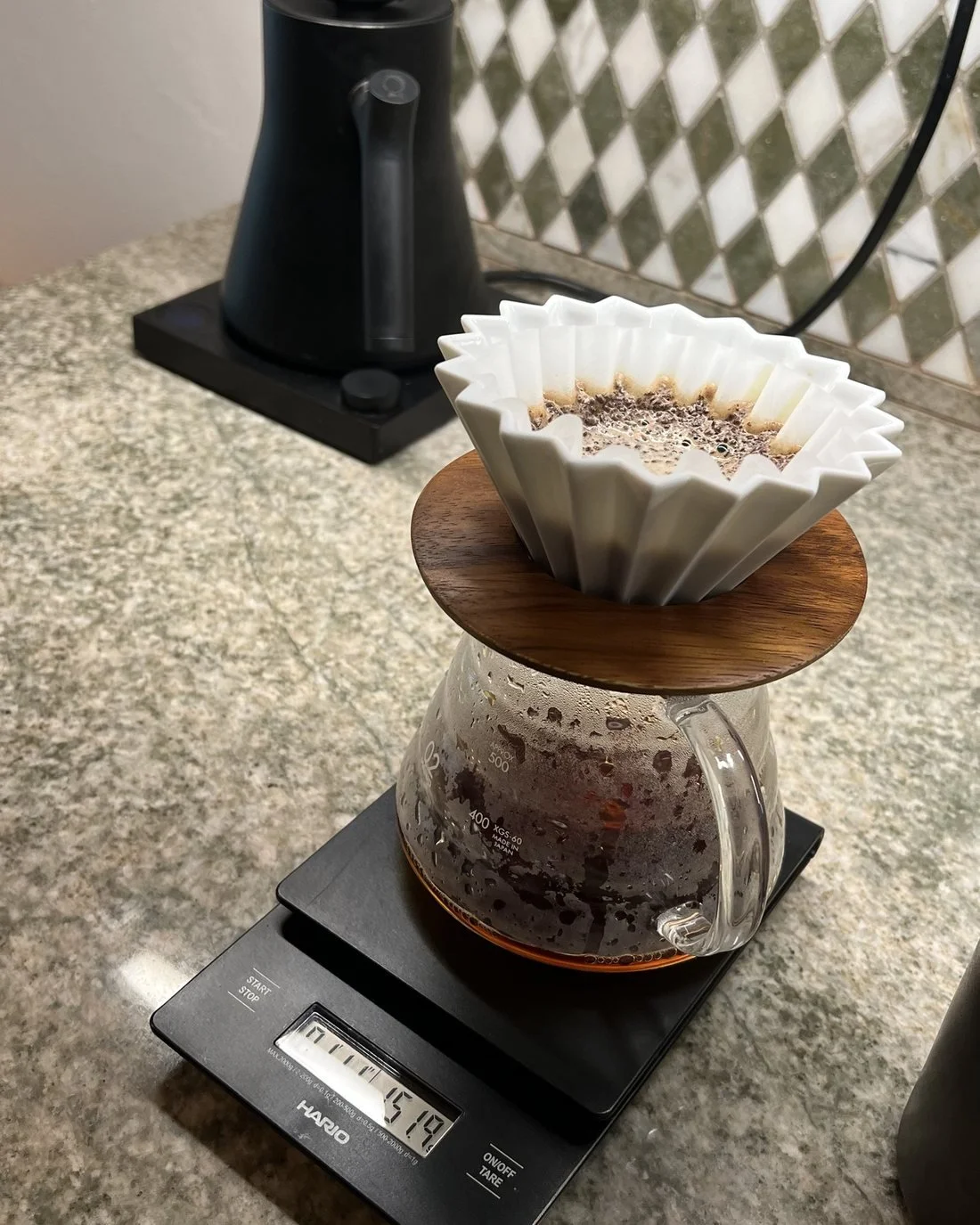
40% for taste, 60% for strength
The 4:6 pour schedule · 17 gWhy our first pour is short
The first two pours always add up to the same 102 g. How you split them changes the cup. A small first pour makes it sweeter, and a big first pour makes it brighter and more acidic. We like it sweet.
How to Make Pour Over Coffee, Step by Step
Prepare
- 01
Heat filtered water to 91°C (196°F).
- 02
Grind 17 g of coffee medium-coarse, about the size of coarse sea salt. On a Comandante C40, that's about 25 clicks.
- 03
Set a paper filter in the Origami dripper, rinse it with hot water, and pour out the rinse water.
- 04
Add the coffee. Hold the dripper and give it a gentle shake so the grounds level out and fill the gaps.
- 05
Set everything on a scale and zero it.
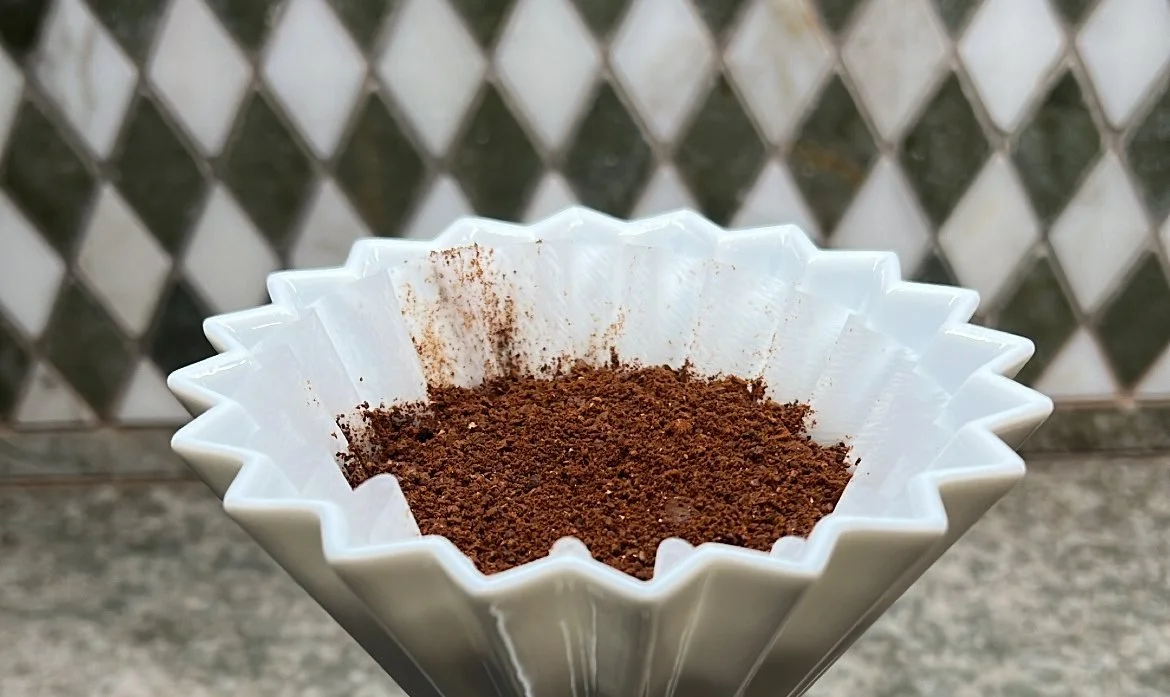
What you need
- Tigrero, whole bean
- An Origami dripper or Hario V60, with paper filters
- A burr grinder (we use a Comandante C40)
- A scale and a timer
- A kettle, ideally gooseneck
- Filtered water
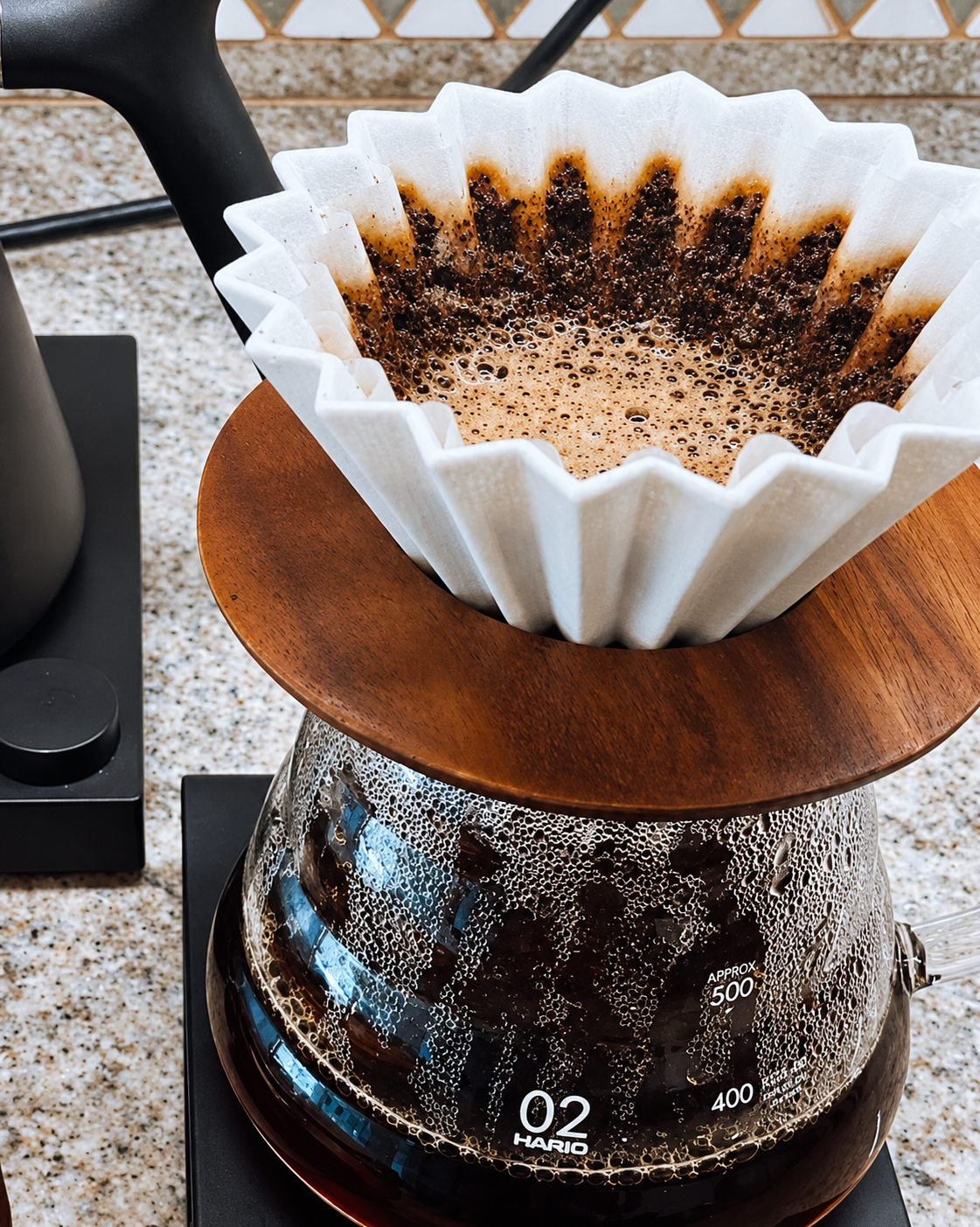
Pour
- 06
0:00Pour 40 g. Start a timer.
- 07
0:45Pour 62 g, to 102 g on the scale.
- 08
1:30Pour 51 g, to 153 g.
- 09
2:10Pour 51 g, to 204 g.
- 10
2:40Pour 51 g, to 255 g.
Pour every time in a spiral: start in the middle, work out toward the edge, then work back in.
Finish
- 11
Let the water drain through. Lift off the dripper at about 3:30.
- 12
Swirl the cup and serve.
Going a little over, to 260–265 g, is fine. It won't water the coffee down.
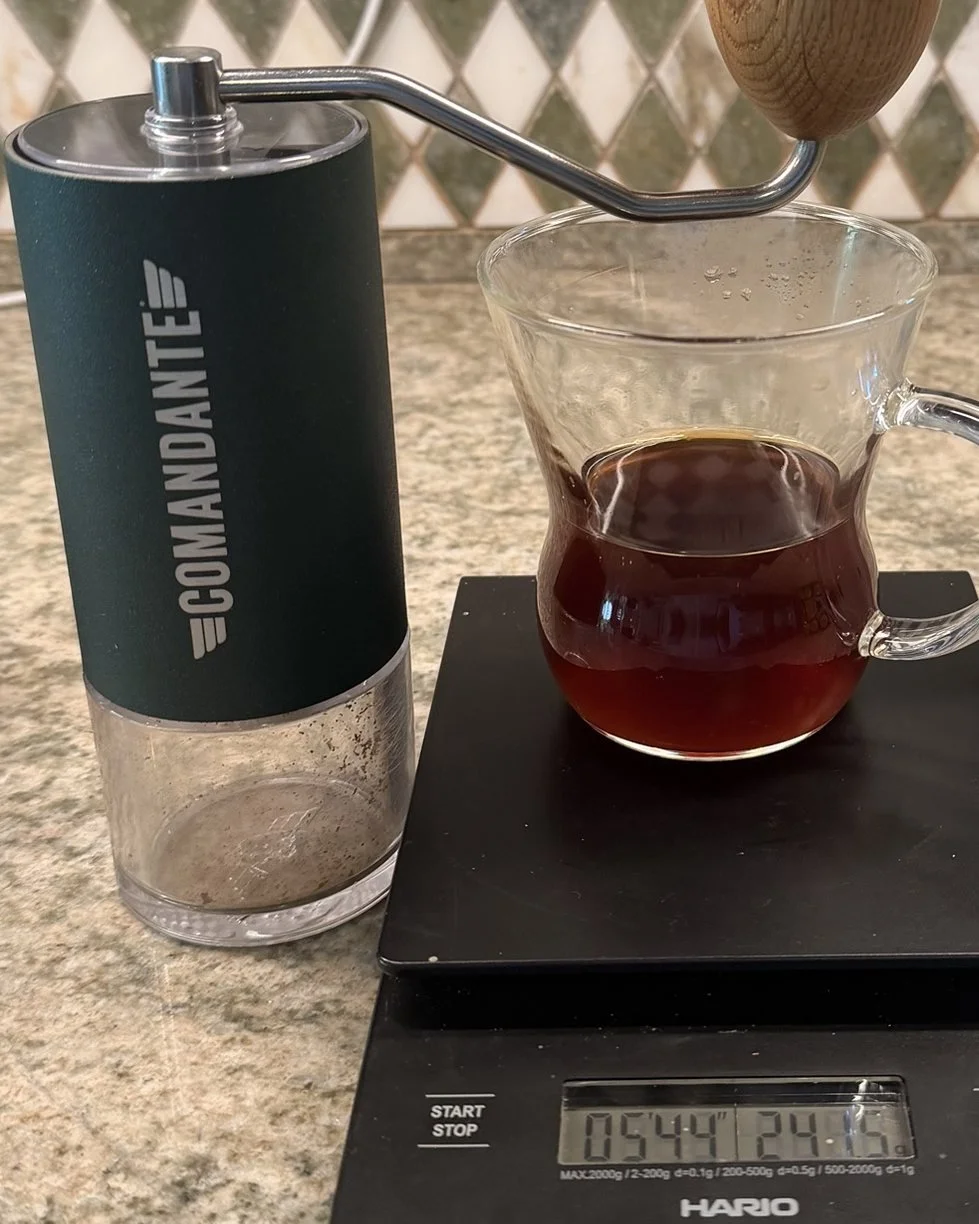
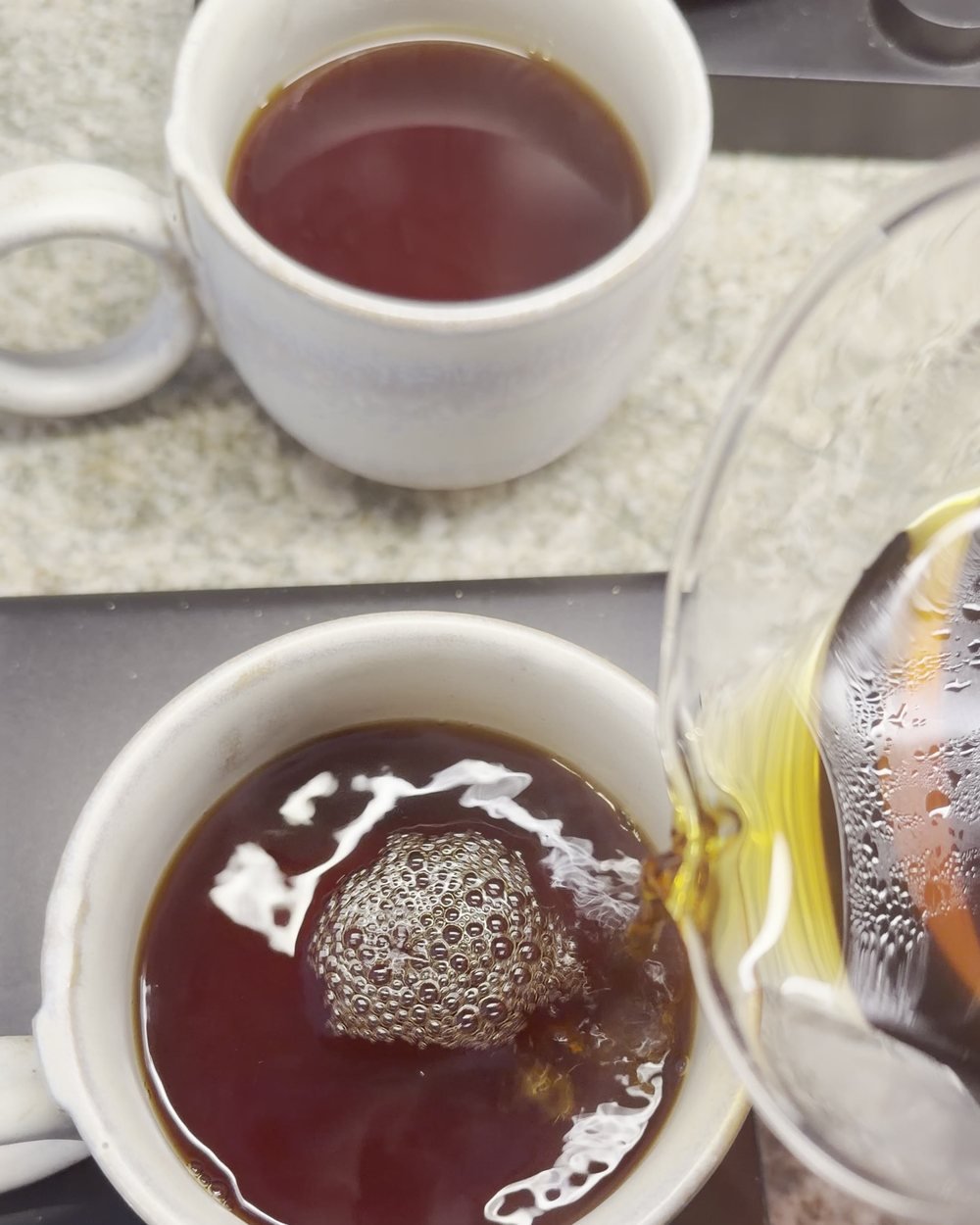
Brewing more or less
Use 15 g of water for every gram of coffee. Put 40% of the water in the first two pours, with the first one shorter, and split the rest into three equal pours.
| Coffee | 0:00 | 0:45 | 1:30 | 2:10 | 2:40 | Water |
|---|---|---|---|---|---|---|
| 17 g | 40 | 62 | 51 | 51 | 51 | 255 g |
| 18 g | 42 | 66 | 54 | 54 | 54 | 270 g |
| 20 g | 47 | 73 | 60 | 60 | 60 | 300 g |
Tetsu Kasuya's method
The 4:6 method was developed by Tetsu Kasuya, the 2016 World Brewers Cup champion. We follow his recipe and change only the dose and the split of the first two pours. Watch him explain it on Hario's YouTube channel.
His original recipe uses 20 g of coffee and 300 g of water on a Hario V60. It works the same on an Origami dripper.
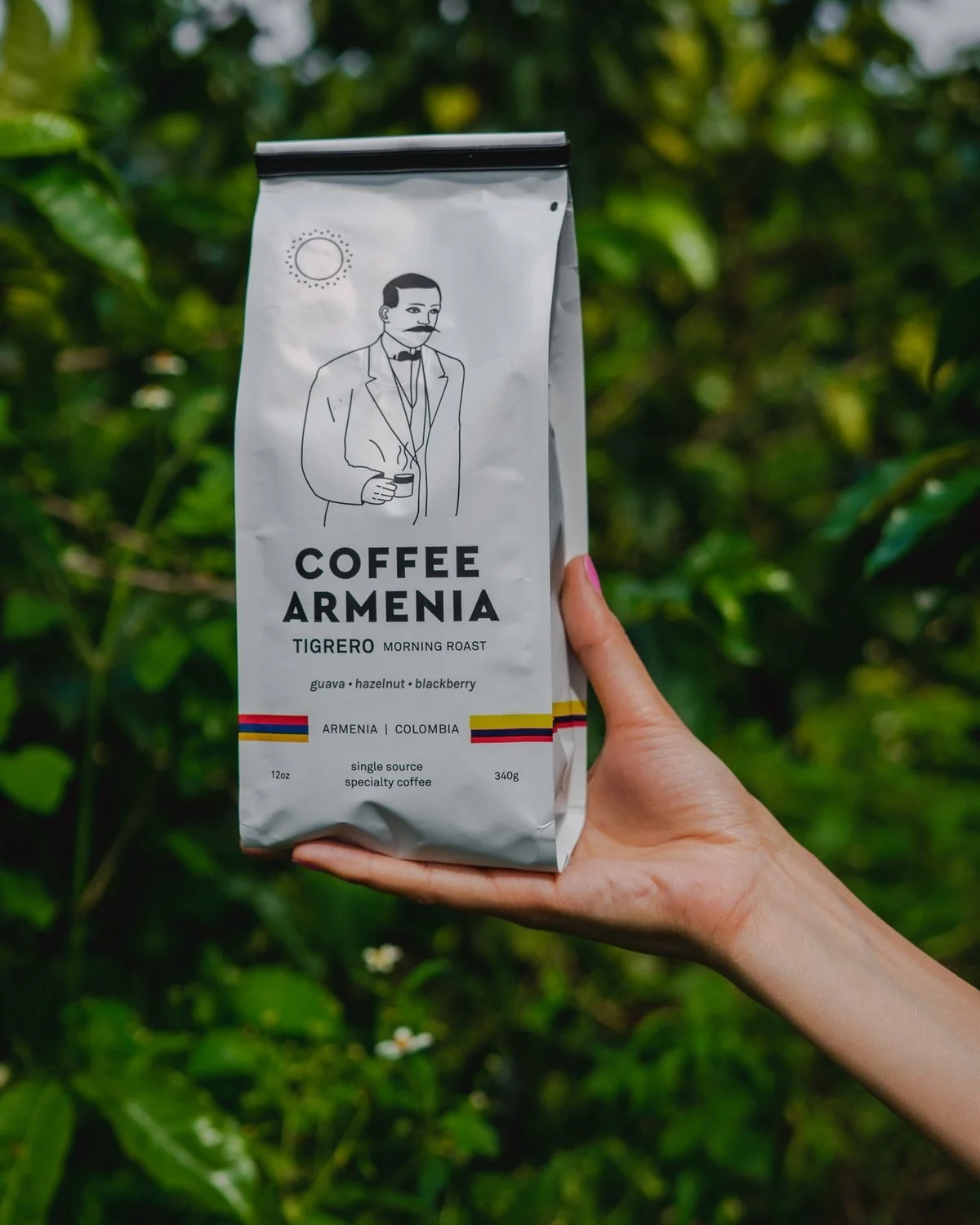
Made for the 4:6
guava • hazelnut • blackberry
A natural-process Castillo from Quindío, Colombia, fermented for 240 hours and roasted medium for pour over. A short first pour brings out its sweetness.
- Region
- Quindío, Colombia
- Variety
- Castillo
- Process
- Natural, 240-hour anaerobic fermentation
- Roast
- Medium
Questions
What is the 4:6 method?
A pour over recipe developed by Tetsu Kasuya. The water is split 40% and 60%. The first 40%, in two pours, controls how sweet or bright the coffee tastes. The last 60%, in three pours, controls how strong it is.
What is the coffee to water ratio for pour over?
We use 1:15, which is 17 g of coffee to 255 g of water for one cup.
What grind size do I need for pour over?
Medium-coarse, about the size of coarse sea salt. On a Comandante C40 we use about 25 clicks.
Why does my pour over taste sour?
In the 4:6 method, a large first pour makes the cup brighter and more acidic. Make the first pour smaller and the second one larger, keeping their total the same.
Can I use a Hario V60 instead of an Origami dripper?
Yes. Kasuya created the method on a V60, and the same recipe works on both.